Harlan Plaza, Centre College
Location:
Danville, KY
Client:
Centre College
Project Area
14,000 sf
Completion
2025
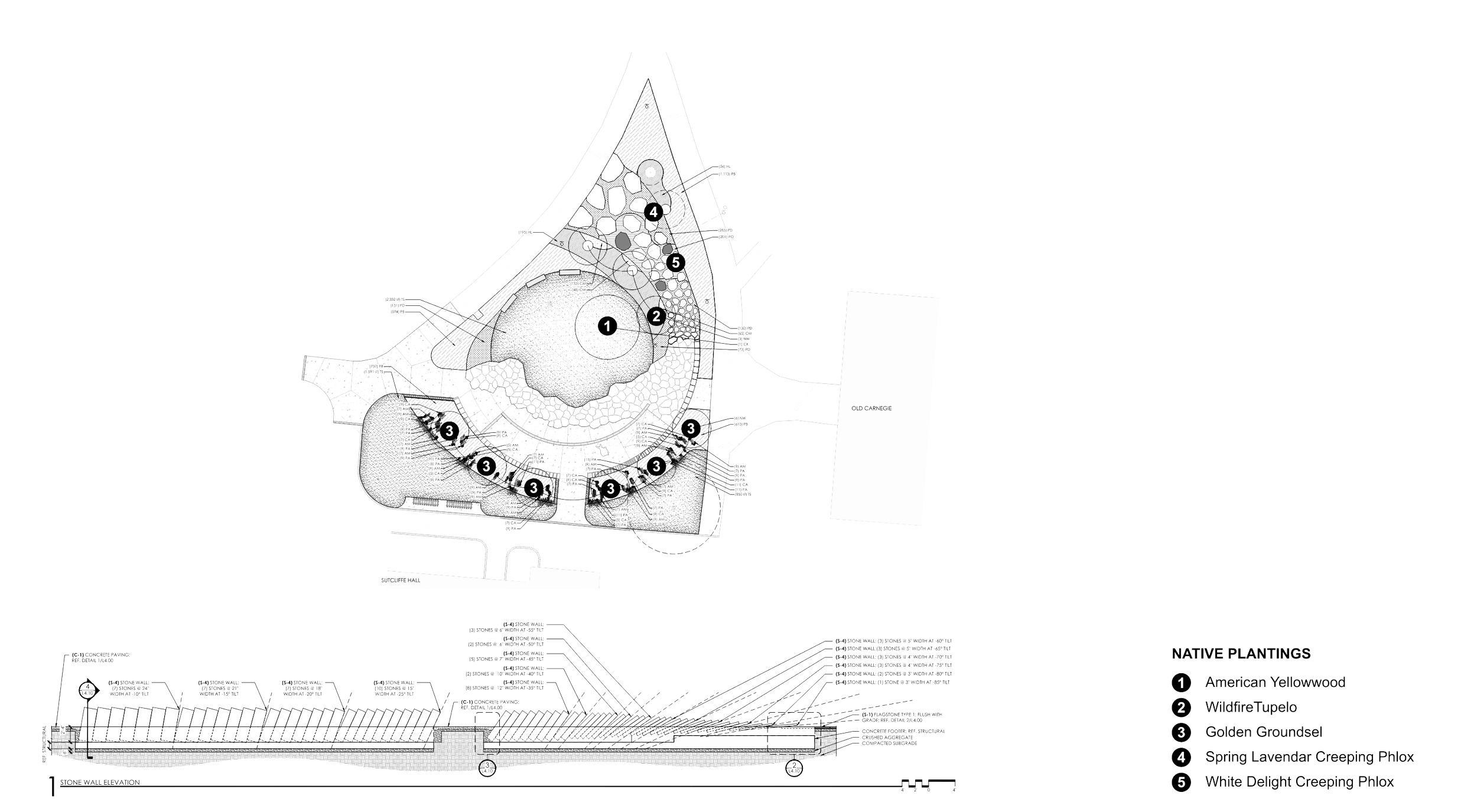
At the crossroads of memory, justice, and public life, Harlan Plaza transforms a campus passage into a civic landscape of reflection and gathering. Designed in collaboration with Centre College and Hodgson Douglas Landscape Architects, the plaza honors John Marshall Harlan — the “Great Dissenter” whose opinions in cases such as Plessy v. Ferguson laid the legal groundwork for the future Civil Rights Movement. More than a monument, the project is conceived as an inhabitable narrative: a place where history becomes spatial experience, and where the enduring work of justice is made tangible through material, form, and procession.
A Wall in Motion
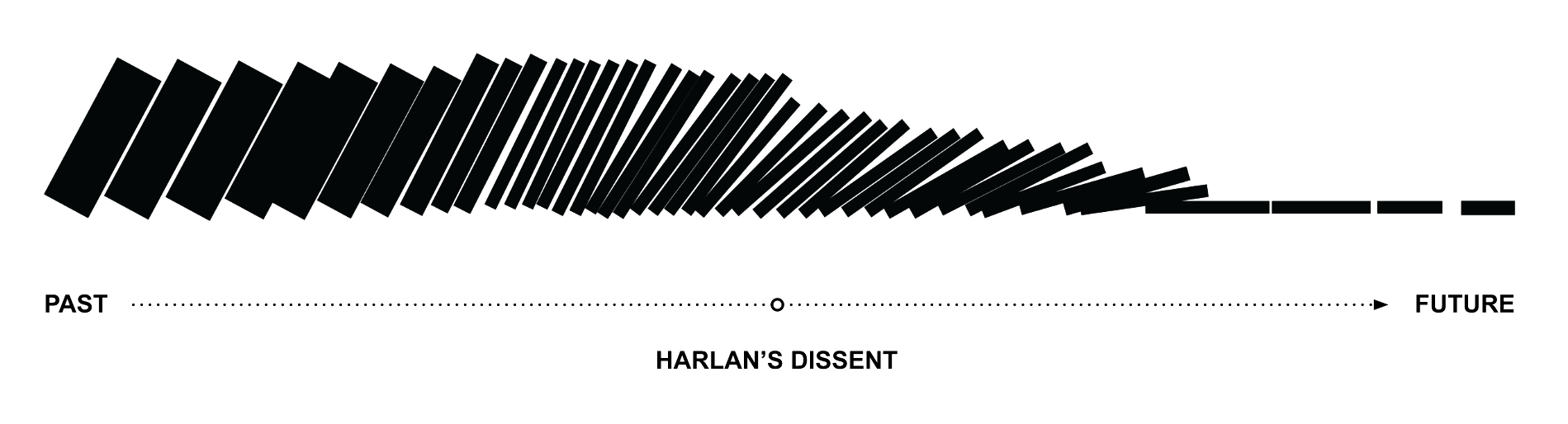
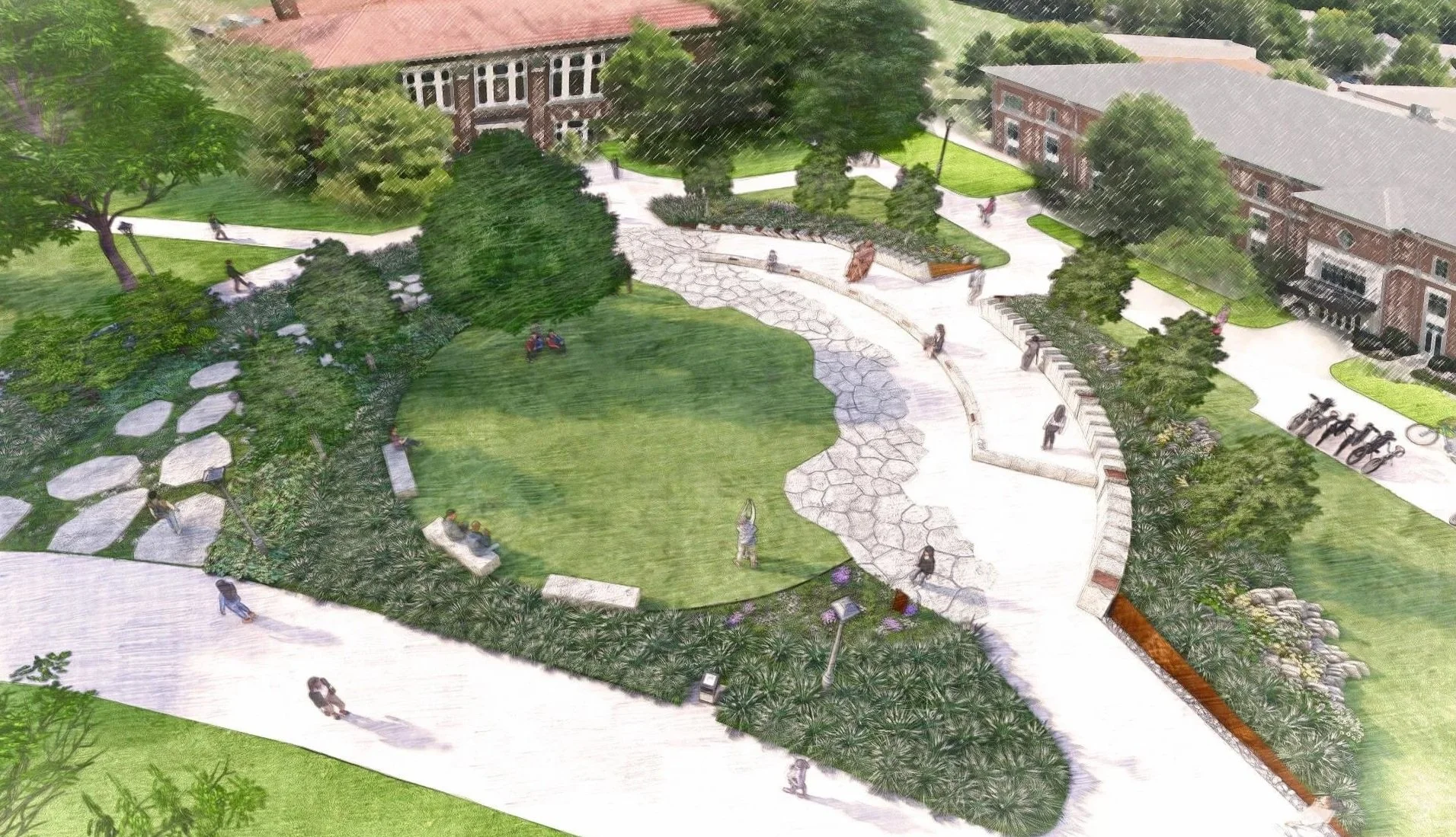
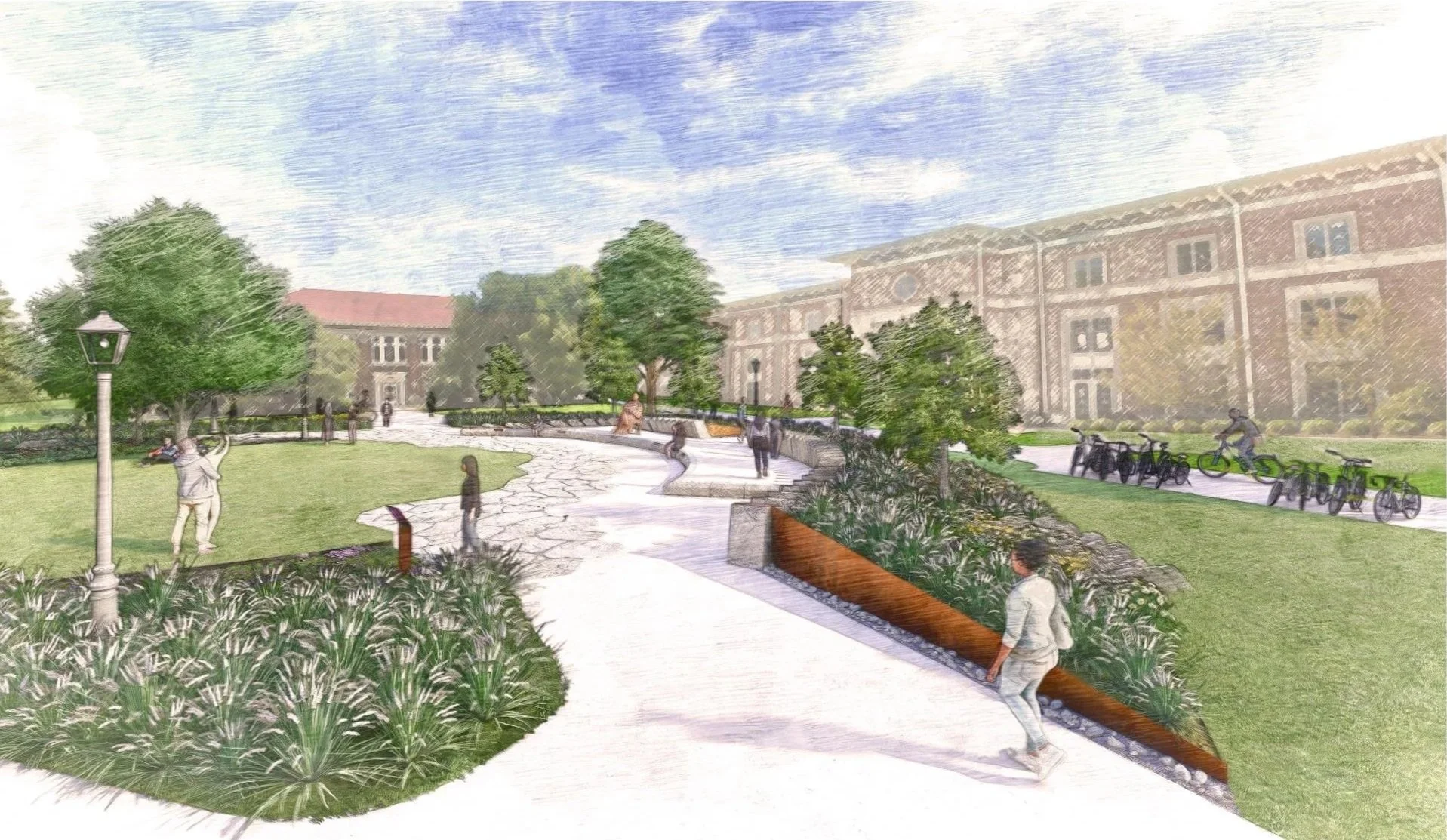
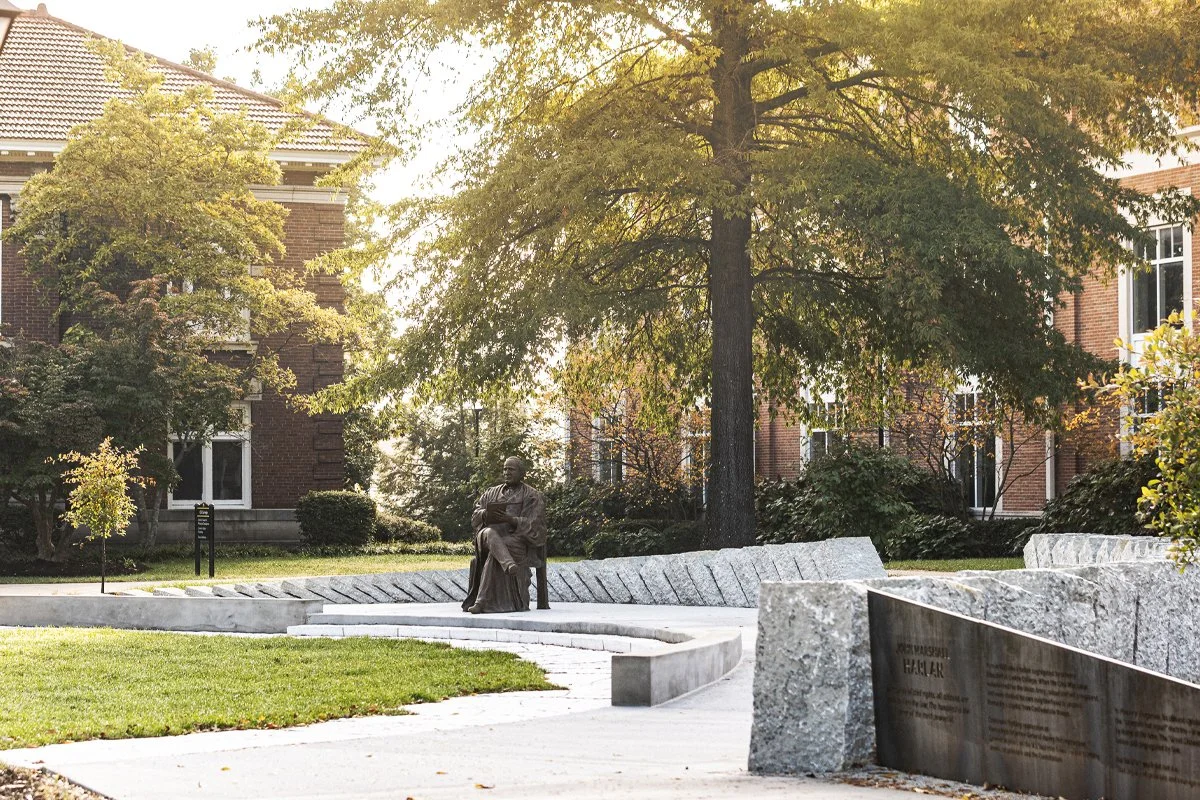
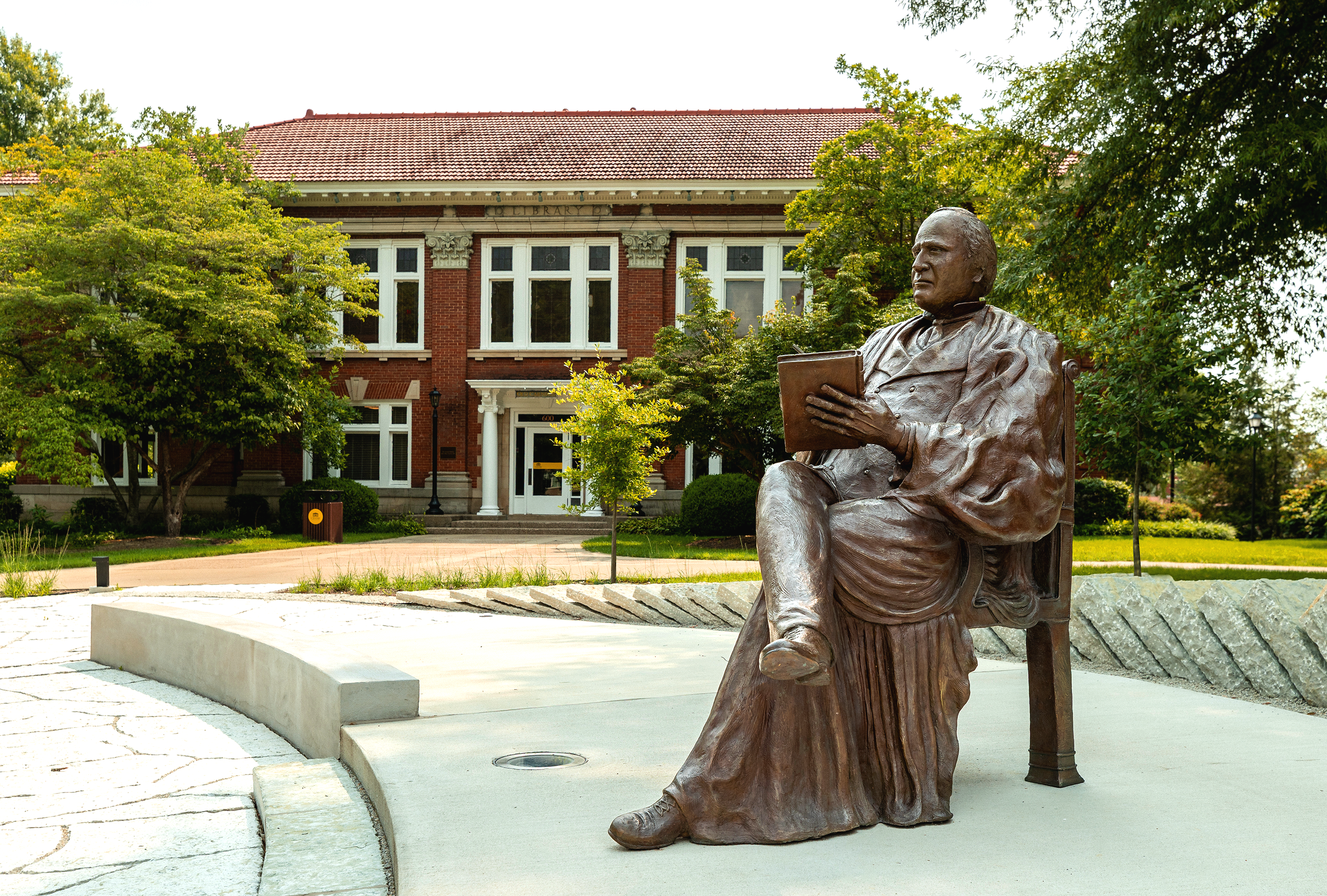
The central gesture of the plaza begins with a wall that appears immovable. Inspired by the dry-stack limestone walls of Central Kentucky and the native stone of Harlan’s family home, the composition initially reads as a singular and ordered barrier. Yet as visitors move through the plaza, the stones begin to tilt, separate, and descend toward the earth, gradually transforming into a walkable path. What begins as obstruction becomes passage.
This transformation embodies the essence of Harlan’s legacy: the difficult and often solitary work of dissent. His opinions, once isolated against the prevailing judgment of his time, slowly became the foundation for future generations seeking equality under the law. The plaza spatializes this progression through a choreography of stone — from rigid verticality to human-scaled terrain — suggesting that meaningful change is often incremental, cumulative, and built over time.
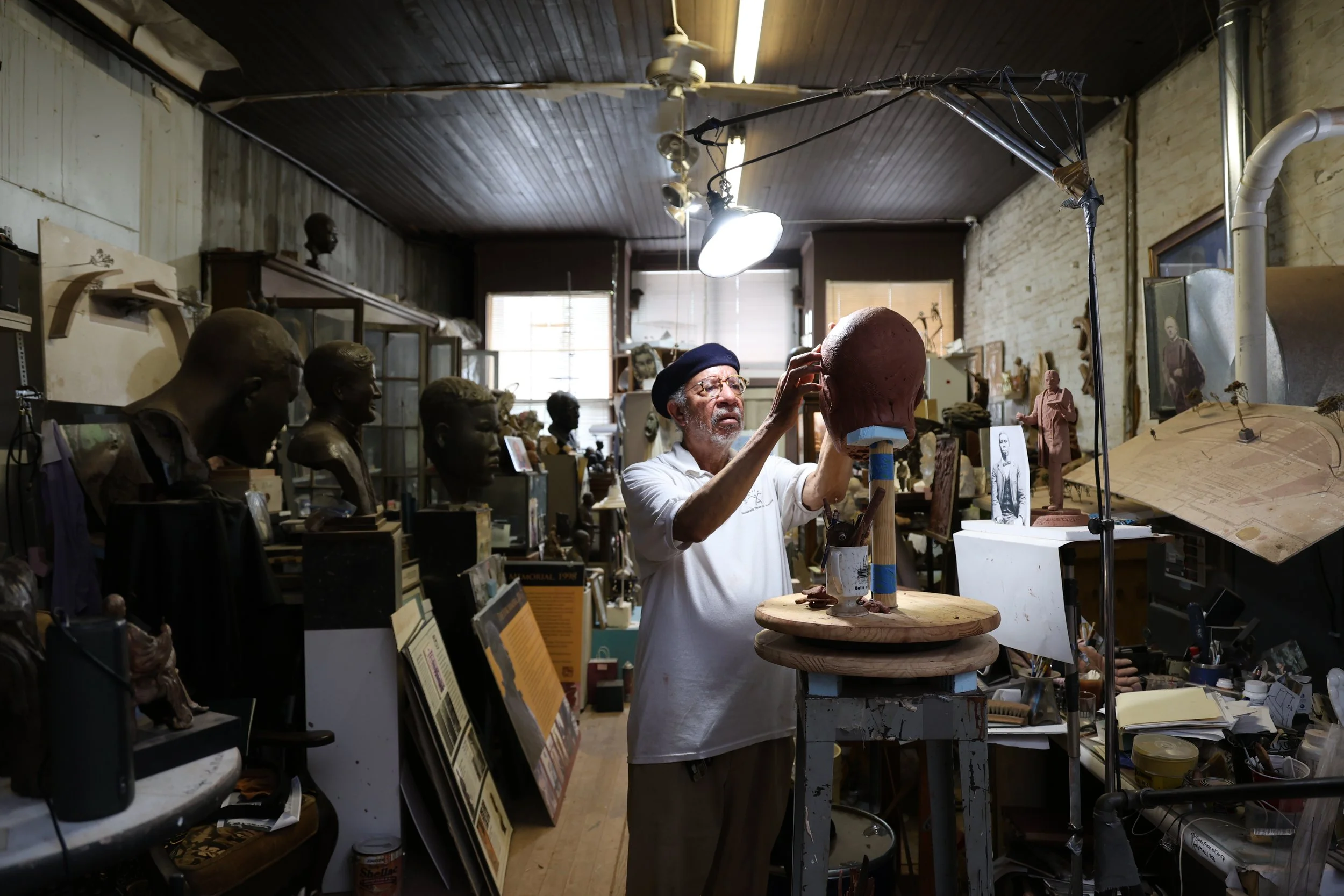
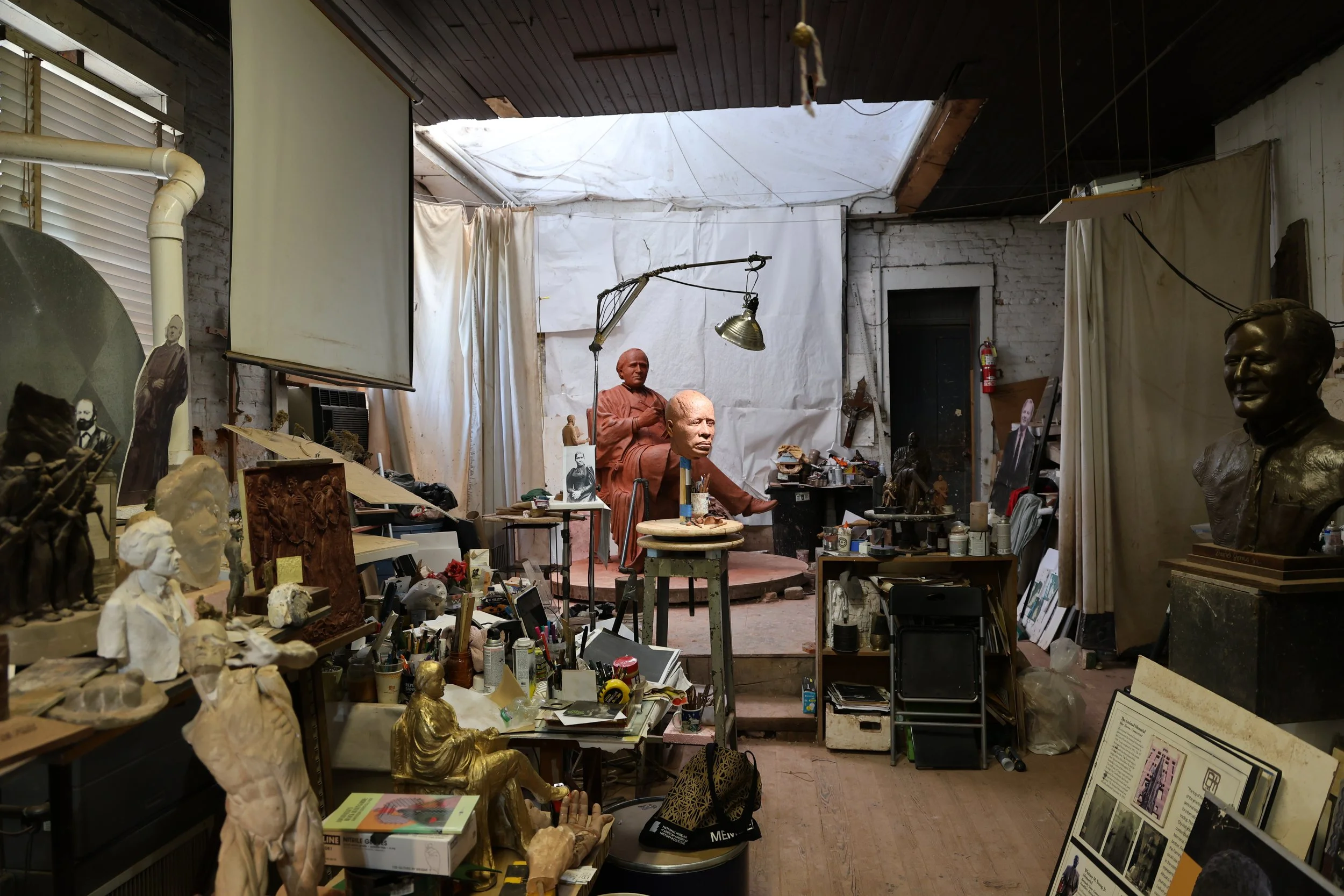
Sculptor Ed Hamilton in his studio
Ed Hamilton
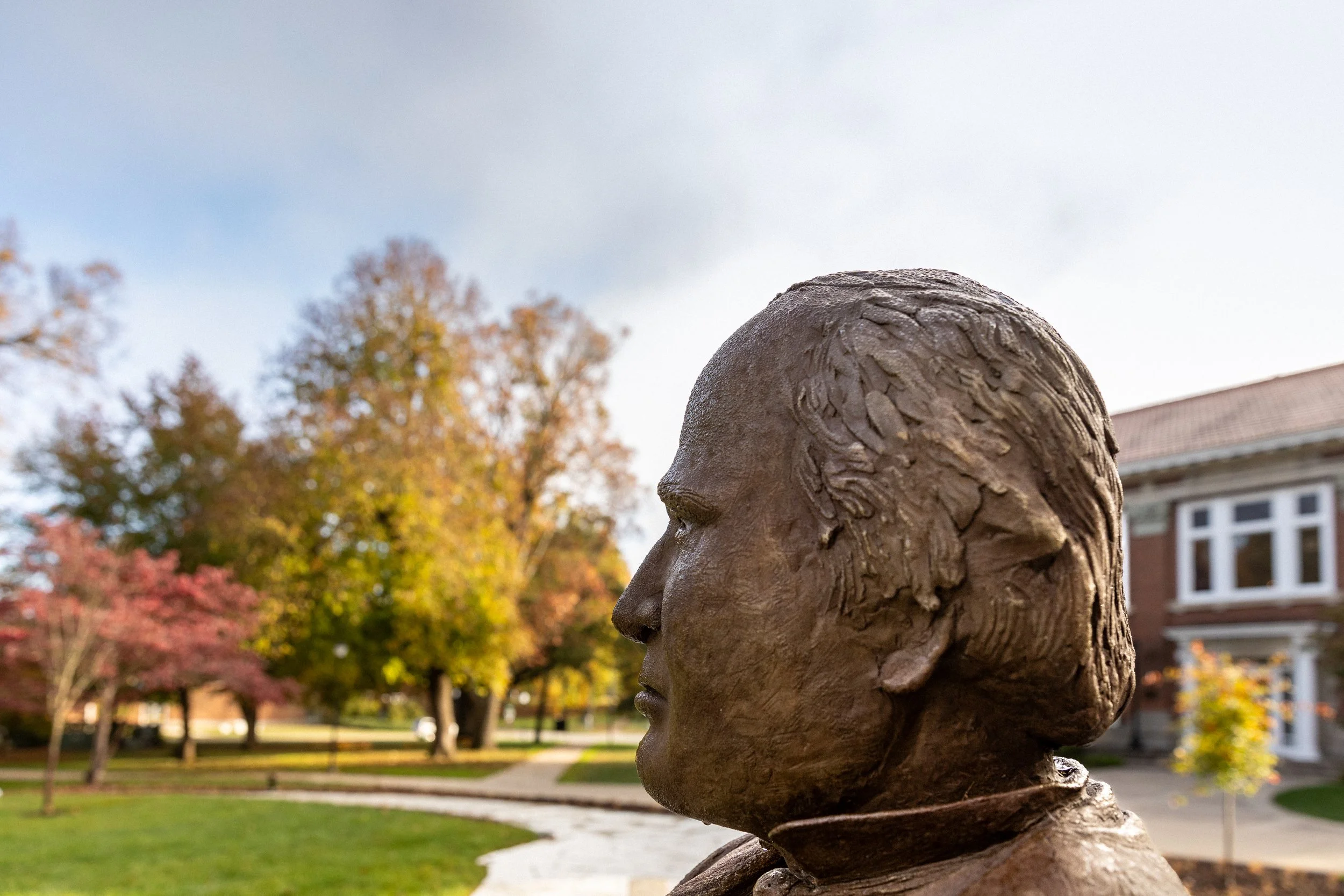
Ed Hamilton is a Louisville-native sculptor whose nationally recognized public monuments examine themes of African American history, civic memory, and American identity. Rather than creating purely representational monuments, Hamilton approaches sculpture as a medium for storytelling and public reflection, using civic space to engage viewers in broader conversations about history, identity, and cultural legacy. For his sculptural process, Ed Hamilton combines the traditional craft of bronze casting with contemporary digital technologies.
Through close collaboration with Hamilton’s team, the SAW helped to streamline this process by importing the scanned maquette directly within a three-dimensional digital model, allowing multiple scale and placement studies to be evaluated within the campus context. Hamilton selected the preferred configuration, and the finalized digital model was transmitted directly to a foam fabrication company to create the large-scale forms used for the clay and subsequent bronze casting process.
This integrated workflow eliminated an intermediate fabrication step, reducing the production schedule by more than a month and allowing most of the installation work to occur during the summer while students were away from campus.
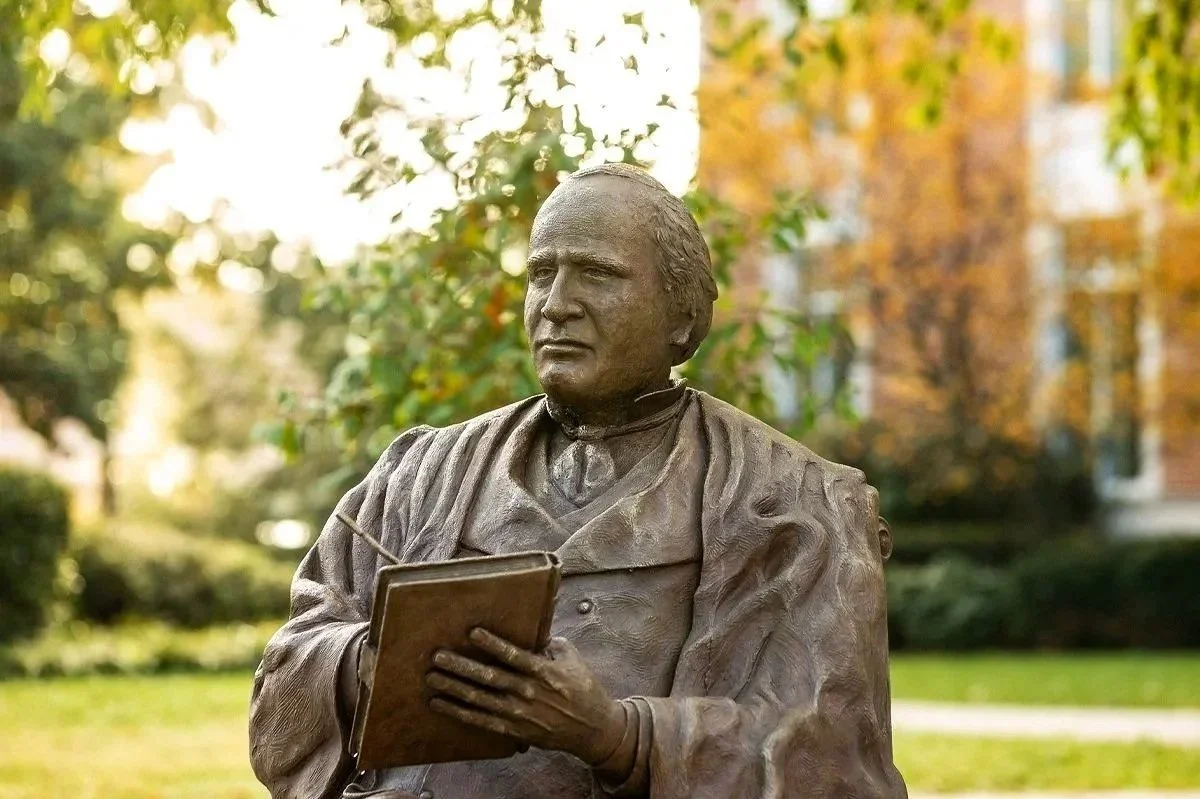
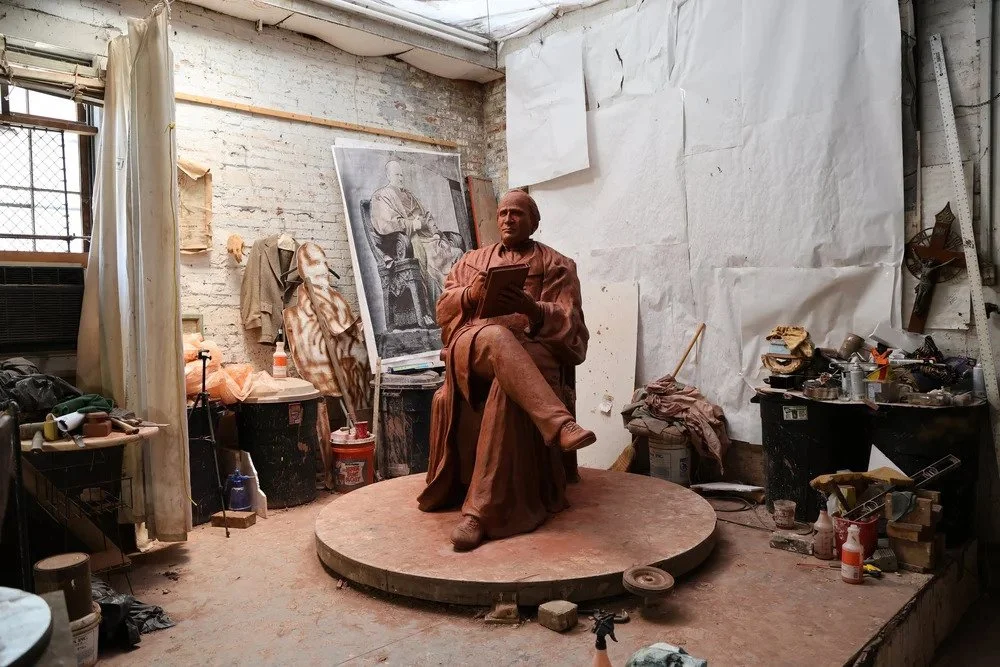
Regarding the artistic direction for the Harlan Sculpture - “Harlan is not elevated above us on a lofty pedestal. Ed Hamilton didn’t sculpt him in a way larger than life scale,” said Ben J. Beaton ’03, Judge, U.S. District Court for the Western District of Kentucky and Centre Trustee. “He is not presented as a removed, untouchable, historical figure, because he’s one of us. Not because he was perfect or left a perfect world behind. Because he was purposeful, you don’t see him sitting there satisfied, but he’s still at work, pen in hand.
Speaking Across Time
At the center of the plaza stands Ed Hamilton’s sculpture of Harlan, positioned deliberately in dialogue with the campus and its history. The statue gazes toward Old Centre, reconnecting Harlan to his years as a student, while simultaneously aligning with Hamilton’s sculpture of Abraham Lincoln nearby, creating an imagined exchange between two figures whose ideas reshaped the American conscience.
Embedded within the stone wall, a series of bronze medallions mark significant moments in Harlan’s life and judicial career. These elements invite visitors to engage physically with history, transforming the monument from a static object into a tactile and educational experience. A corten steel marker at the plaza entry frames the project with one of Harlan’s most enduring quotations, grounding the space in both biography and civic aspiration.
A Civic Landscape for Campus Life
Situated along one of the most heavily traveled pedestrian corridors on campus, Harlan Plaza is designed equally as memorial and everyday public space. The project avoids the detachment often associated with monuments, instead encouraging occupation, conversation, and informal gathering. Students pause on the angled stones between classes, gather for lectures and discussions, or read quietly on the steps near the sculpture. The memorial becomes activated through ordinary life.
The plaza’s layered topography and carefully scaled interventions create moments of intimacy within a larger civic gesture. Seating, pathways, and landscape elements are integrated seamlessly into the architectural concept, allowing the space to function simultaneously as commemorative landmark and social commons. In this way, the project extends Harlan’s legacy beyond remembrance alone, positioning the plaza as a living framework for dialogue, education, and collective reflection.
Material as Memory
The material palette reinforces the project’s conceptual clarity. Limestone anchors the plaza in the geology and craft traditions of Kentucky, while weathering steel introduces a contemporary counterpoint that speaks to endurance and time. The tactile roughness of the stone contrasts with the precision of the sculptural interventions, creating a balance between permanence and transformation.
The plaza’s restrained formal language allows the narrative embedded within the work to emerge gradually through movement and occupation. Rather than relying on overt symbolism, the project communicates through procession, alignment, and material evolution — architectural tools that invite interpretation and reward repeated experience.
A Place of Continuing Meaning
Harlan Plaza demonstrates how memorial architecture can move beyond commemoration toward participation. By translating the moral courage of dissent into spatial form, the project creates an environment that is both historically grounded and forward-looking. It is a place where visitors encounter not only the legacy of one individual, but also the enduring responsibility of civic engagement itself.